Many homeowners confuse jet washing with other cleaning methods or don’t fully grasp how this powerful technology actually works. Whether you’re tackling stubborn algae on your driveway or years of coastal grime on your walls, understanding jet washing helps you clean safely and effectively. This guide explains exactly what jet washing is, how the equipment functions, and why it matters for maintaining your property in Cornwall and Devon’s unique coastal climate.
Table of Contents
- Understanding Jet Washing: How It Works And Key Components
- Common Issues And Safety Precautions Every Homeowner Should Know
- Jet Washing For Homes In Cornwall And Devon: Benefits And Best Practices
- Comparing Jet Washing With Other Cleaning Methods
- Explore Professional Jet Washing Services In Cornwall And Devon
- Frequently Asked Questions
Key takeaways
| Point | Details |
|---|---|
| Jet washing basics | High-pressure water sprayer that removes dirt, grime, and stains from exterior surfaces using specialised nozzles and pump systems. |
| Pressure control matters | Incorrect PSI settings or nozzle choices can damage delicate surfaces or cause serious injuries requiring professional assessment. |
| Safety is critical | Over 7,000 pressure washing injuries occurred in 2021, making proper protective equipment and technique essential. |
| Local expertise helps | Cornwall and Devon’s coastal conditions require specific knowledge about pressure settings and surface treatments for effective, safe cleaning. |
Understanding jet washing: how it works and key components
Jet washing uses high-pressure water to blast away stubborn dirt, algae, paint residue, and accumulated grime from outdoor surfaces. The technology relies on a motor-driven pump system that forces water through specially designed nozzles, creating concentrated streams powerful enough to dislodge years of buildup.
The core components work together seamlessly. Your jet washer contains a motor that powers a high-pressure pump, which draws water from your supply and compresses it dramatically. This pressurised water travels through a reinforced hose to a trigger gun, where you control the flow. The magic happens at the nozzle, where pressure generation relies on restriction and specific design features that convert volume into force.
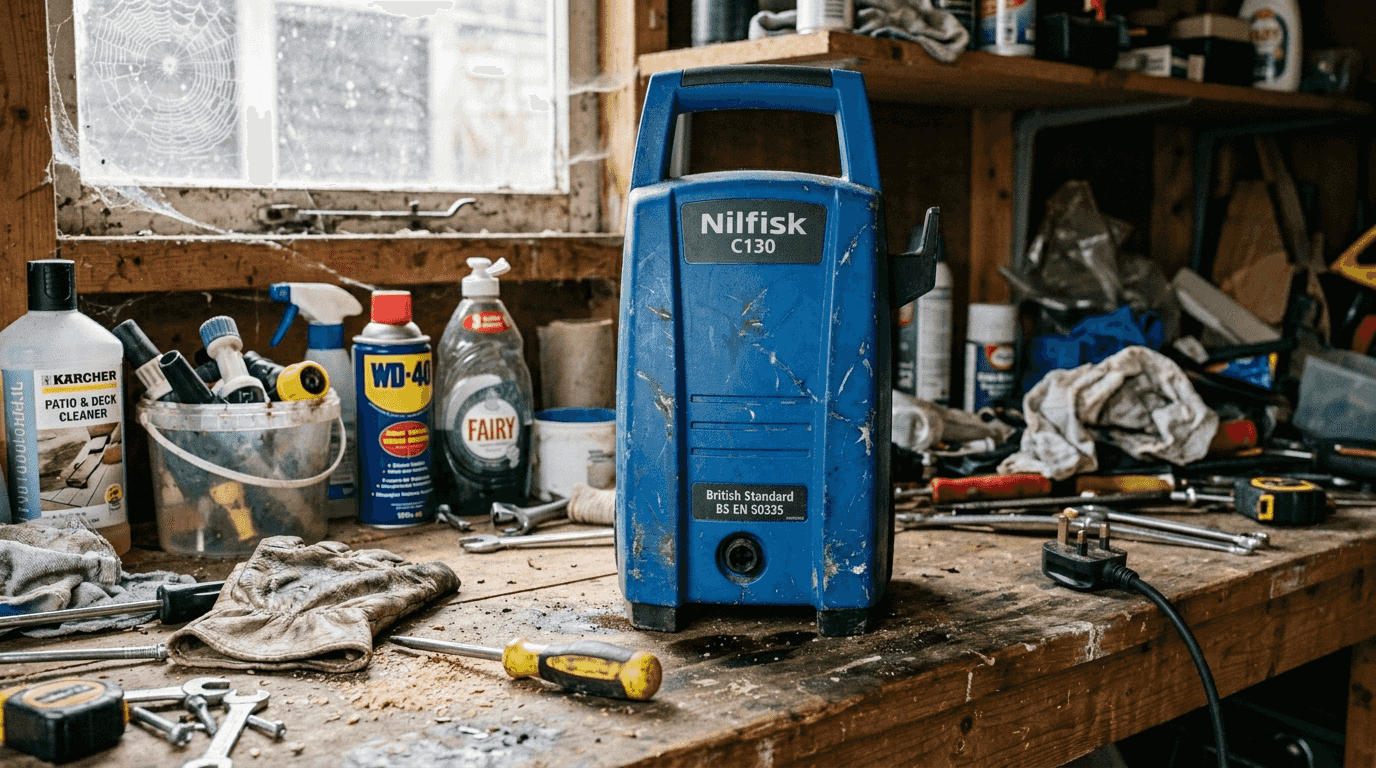
Think of it like putting your thumb over a garden hose. Restricting the opening increases the water’s velocity and cleaning power. Professional jet washing equipment takes this principle to industrial levels, generating pressures between 1,000 and 4,000 PSI depending on the application.
Here are the essential components that make jet washing effective:
- Motor or engine providing power to drive the pump system
- High-pressure pump compressing water to create force
- Reinforced hose rated for extreme pressure without bursting
- Trigger gun with safety lock for controlled operation
- Interchangeable nozzles for different spray patterns and pressures
- Pressure regulator allowing adjustment for various surfaces
Pro Tip: Always ensure your water supply provides adequate flow rate before starting. Insufficient water creates air pockets in the pump (cavitation), which damages internal components and drastically shortens equipment life. Check manufacturer specifications for minimum gallons per minute required.
When you pull the trigger, you’re not just spraying water harder. You’re creating a mechanical force that breaks molecular bonds between dirt and your surfaces. This explains why jet washing removes stains that scrubbing never touches. Our professional jet washing services use industrial-grade equipment calibrated specifically for Cornwall and Devon’s mix of granite, render, and coastal building materials.
Common issues and safety precautions every homeowner should know
Even experienced users encounter jet washing problems that compromise results or create hazards. Understanding these issues helps you troubleshoot effectively or recognise when professional help prevents costly damage.
Pressure problems manifest in several ways. You might experience low or absent pressure, pulsing inconsistent streams, or adequate flow but poor cleaning performance. These symptoms typically point to clogged nozzles, worn seals, air trapped in the system, or failing pump components. A partially blocked nozzle creates erratic spray patterns that miss spots and waste time.
Improper nozzle selection causes the majority of surface damage incidents. Red zero-degree nozzles concentrate all force into a pinpoint stream capable of etching concrete, stripping paint, and even cutting through wood. Many homeowners don’t realise different colours indicate different spray angles and pressures. Starting with a wide-angle green or white nozzle, then working down to narrower patterns only if needed, prevents irreversible damage.
Safety considerations extend beyond protecting your property:
- Wear safety goggles rated for impact protection against flying debris
- Use closed-toe boots with non-slip soles on wet surfaces
- Keep the nozzle at least 30 centimetres from the surface initially
- Never point the spray at people, pets, or electrical fixtures
- Avoid jet washing from ladders due to powerful kickback forces
- Test pressure on inconspicuous areas before tackling visible sections
In 2021 alone, emergency departments treated 7,047 pressure washing injuries, primarily from high-pressure water penetrating skin, kickback incidents launching debris, and falls from unstable positions. The force is genuinely dangerous.
Electrical hazards deserve special attention. Water and electricity create lethal combinations, so always use ground fault circuit interrupters (GFCIs) with electric models. Keep connections dry and elevated. Petrol-powered units eliminate electrical risks but introduce exhaust fumes requiring adequate ventilation.
Chemical detergents amplify cleaning power but require careful handling. Never mix products, and always follow dilution ratios precisely. Concentrated solutions damage plants, corrode metal fixtures, and create environmental hazards if they enter storm drains. Rinsing thoroughly prevents residue from attracting dirt faster than before you cleaned.
Our DIY pressure washing tips cover additional safety protocols specific to common home projects, helping you avoid the pitfalls that turn straightforward cleaning into expensive repairs.
Jet washing for homes in Cornwall and Devon: benefits and best practices
Coastal properties face unique challenges that make regular jet washing particularly valuable. Salt spray, persistent moisture, and milder winters create perfect conditions for algae, lichen, and mould to colonise every exterior surface. Left unchecked, these organisms don’t just look unsightly—they actively degrade materials and reduce property values.
Jet washing delivers tangible benefits for local homeowners. It removes biological growth before it penetrates porous surfaces like render and sandstone. It strips away years of pollution that coastal winds deposit on walls and patios. Most importantly, it extends the lifespan of expensive exterior finishes by preventing premature deterioration. Clean surfaces also improve kerb appeal dramatically, which matters whether you’re selling or simply taking pride in your home’s appearance.
Follow these best practices for optimal results:
- Inspect all surfaces for cracks, loose materials, or vulnerable areas before starting
- Pre-treat heavily soiled sections with appropriate detergent, allowing dwell time
- Work from top to bottom, letting gravity assist rather than fighting it
- Maintain consistent distance and angle to avoid streaking or uneven cleaning
- Rinse thoroughly using lower pressure to remove all detergent residue
- Plan timing around weather—avoid jet washing before predicted frost or heavy rain
Different surfaces require dramatically different approaches. Understanding appropriate pressure prevents damage that ruins materials:
| Surface type | Maximum PSI | Nozzle recommendation | Special considerations |
|---|---|---|---|
| Concrete driveways | 3,000 | 15-25 degree | Can handle aggressive cleaning |
| Brick walls | 2,500 | 25-40 degree | Avoid damaged mortar joints |
| Render/stucco | 1,500 | 40 degree | Test hidden areas first |
| Wood decking | 1,200 | 40-65 degree | Low pressure prevents splintering |
| UPVC windows/doors | 1,500 | 40 degree | Protect seals and glazing |
| Roof tiles | 1,800 | 25-40 degree | Professional assessment recommended |
Pro Tip: Hire experienced professionals who understand Cornwall and Devon’s specific building materials and coastal conditions. Local stone types, traditional lime mortars, and salt-weathered surfaces need expertise that generic pressure washing tutorials don’t cover. Getting it wrong damages heritage features that cost thousands to restore properly.
Seasonal timing matters more than many homeowners realise. Spring cleaning removes winter’s accumulated grime before summer entertaining. Autumn jet washing clears fallen leaves and organic matter before they decompose and stain. Understanding exterior cleaning importance in Cornwall helps you schedule maintenance that prevents problems rather than just reacting to them.
Comparing jet washing with other cleaning methods
Homeowners often struggle to distinguish between various exterior cleaning techniques, leading to confusion about which approach suits their needs. Whilst jet washing and pressure washing are essentially identical terms (regional vocabulary variations), other methods offer genuinely different benefits.
Many people confuse terminology, but understanding differences helps you make informed decisions. Jet washing typically emphasises higher pressures and focused nozzle applications, making it ideal for robust surfaces like concrete and brick. Standard pressure washing might use slightly lower PSI settings whilst achieving similar results through technique and dwell time.
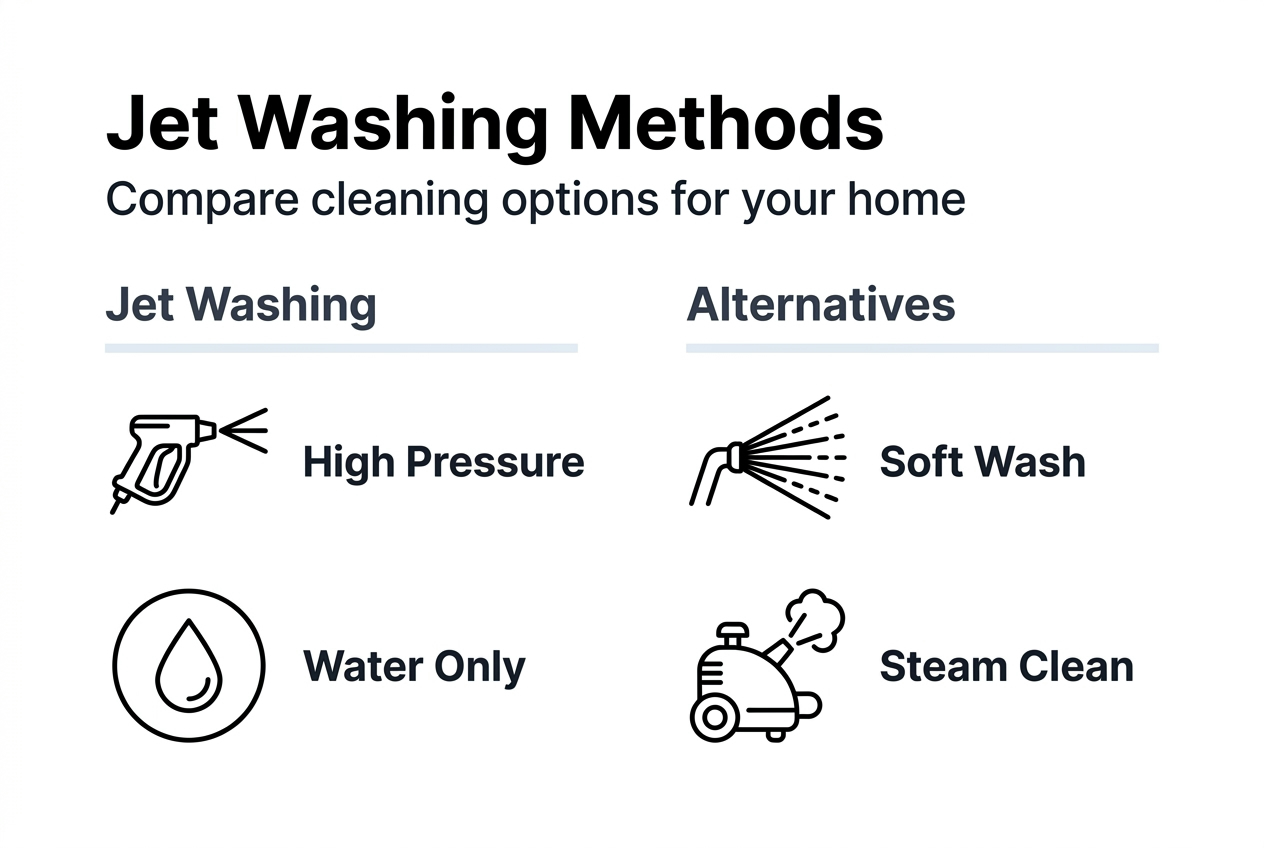
Soft washing represents a fundamentally different philosophy. Instead of relying on water pressure alone, it combines low-pressure application (under 500 PSI) with specialised chemical solutions that break down organic growth biologically. This gentler approach protects delicate surfaces like roof tiles, painted render, and aged stonework whilst still achieving deep cleaning results. The chemicals do the work, not the force.
Steam cleaning uses superheated water vapour rather than high pressure. Temperatures exceeding 150°C sanitise surfaces, killing bacteria, mould spores, and pathogens without chemicals. This method excels for sensitive historical buildings, intricate architectural details, and situations where chemical runoff poses environmental concerns. Our guide on steam cleaning benefits explores when this approach outperforms traditional jet washing.
Here’s how the main methods compare:
| Method | Pressure level | Best for | Environmental impact | Typical applications |
|---|---|---|---|---|
| Jet washing | 2,000-4,000 PSI | Driveways, patios, robust masonry | Moderate water use, detergent runoff | Heavy-duty exterior cleaning |
| Pressure washing | 1,500-3,000 PSI | General exterior surfaces | Similar to jet washing | Versatile home maintenance |
| Soft washing | Under 500 PSI | Roofs, render, painted surfaces | Chemical solutions require careful handling | Delicate surface cleaning |
| Steam cleaning | Minimal pressure | Heritage buildings, sanitisation needs | Minimal chemicals, lower water volume | Specialist restoration work |
Consider these factors when choosing your cleaning method:
- Surface material composition and condition
- Type and severity of soiling or biological growth
- Proximity to sensitive plants, water features, or drainage
- Historical significance or architectural value
- Budget and frequency of required maintenance
- Environmental regulations and disposal requirements
No single method suits every situation. Professional cleaners often combine techniques, using soft washing for render whilst jet washing the patio during the same visit. This tailored approach delivers optimal results without compromising safety or surface integrity.
Explore professional jet washing services in Cornwall and Devon
Now that you understand how jet washing works and what it achieves, you might be weighing DIY efforts against professional services. Whilst hiring equipment remains an option for simple projects, Cornwall and Devon’s unique coastal environment, diverse building materials, and unpredictable weather make professional expertise particularly valuable.

Our team brings industrial-grade equipment, comprehensive insurance, and years of local experience to every job. We understand how salt air affects different surfaces, which detergents work with Cornish granite versus Devon sandstone, and precisely what pressure settings protect your property whilst delivering exceptional results. From routine maintenance to preparing homes for sale, our professional jet washing services transform tired exteriors safely and efficiently.
Regular professional cleaning does more than improve appearances. It identifies potential problems early, prevents costly damage, and maintains the value you’ve invested in your property. Discover why clean home exterior importance extends far beyond kerb appeal, protecting your investment for years to come. We also offer specialised commercial exterior cleaning for property managers overseeing multiple buildings or larger facilities.
Frequently asked questions
What is the difference between jet washing and pressure washing?
Jet washing and pressure washing refer to essentially the same process, with terminology varying by region and specific equipment used. Both methods use high-pressure water streams to clean surfaces, though “jet washing” often emphasises higher PSI settings and more focused nozzle applications. The distinction matters less than understanding correct pressure and technique for your specific surfaces. Our guide on pressure washing myths clarifies common misconceptions about terminology and capabilities.
Is jet washing safe for all exterior surfaces?
No, different materials tolerate vastly different pressure levels, and using excessive force damages delicate surfaces permanently. Render, old brickwork with weak mortar, painted wood, and roof tiles require careful assessment and often lower PSI settings or alternative methods like soft washing. Professional evaluation ensures you clean effectively without causing harm. Testing inconspicuous areas first helps gauge how surfaces respond before tackling visible sections.
How often should I jet wash my home exterior in Cornwall and Devon?
Most properties benefit from jet washing every 12 to 24 months, depending on exposure to coastal weather, surrounding vegetation, and surface materials. Homes near the sea accumulate salt spray and algae faster, potentially requiring annual cleaning. Sheltered properties with good drainage might extend intervals to two years. Regular inspections help you spot biological growth or heavy soiling before it becomes difficult to remove. Learn more about exterior cleaning frequency Cornwall and optimal scheduling for local conditions.
Can I jet wash during winter months?
Winter jet washing requires extra precautions due to freezing risks and reduced drying times. Water trapped in cracks expands when frozen, causing spalling and structural damage. Choose mild days with temperatures above 5°C and no frost predicted for 48 hours afterwards. Professional services often schedule winter maintenance strategically, focusing on south-facing surfaces that dry quickly and avoiding vulnerable areas until spring.
What detergents work best for jet washing in coastal areas?
Coastal properties need detergents specifically formulated to break down salt deposits, algae, and lichen without harming marine ecosystems. Biodegradable, pH-neutral solutions provide effective cleaning whilst minimising environmental impact. Avoid harsh chemicals near drainage systems that lead to beaches or estuaries. Professional services use industry-approved products that balance cleaning power with environmental responsibility, ensuring compliance with local regulations.
Recommended
- Soft Washing vs Pressure Washing: What’s Best for Cornwall Homes? – jetpowerpressurewashing.co.uk
- Steam Cleaning – jetpowerpressurewashing.co.uk
- The Benefits of Steam Cleaning Over Regular Pressure Washing in Cornwall & Devon – jetpowerpressurewashing.co.uk
- Why Hiring a Professional Pressure Washing Firm in Cornwall and Devon Is a Smart Investment – jetpowerpressurewashing.co.uk
- Best Guide about Jet Wash Drain Cleaners in 2024