Gutters are easy to overlook until rainwater starts pouring over the edge. By that point, leaves, moss and other debris may already be preventing your roof drainage system from working properly.
For homeowners and businesses across Cornwall and Devon, recognising the early signs of blocked gutters can help you arrange maintenance before a small problem becomes a more disruptive one. Jet Power Pressure Washing are here to help! Whether you own a terraced house in Plymouth, a bungalow in Bodmin or a holiday property in St Ives, the same principle applies: rainwater needs a clear route from your roof to the drainage system below.
This guide explains five signs your gutters need cleaning, what each warning could mean and when professional gutter clearance is the sensible next step.
The five main signs are overflowing rainwater, visible debris or plant growth, staining beneath the roofline, sagging guttering and unusual pooling or downpipe behaviour. Some also indicate defects, so cleaning should be accompanied by an assessment where necessary.
1. Water spills over your gutters when it rains
Overflowing gutters are one of the clearest signs that something is wrong. Instead of travelling along the gutter and into the downpipe, water escapes over the front or back edge.
You might notice a waterfall above your front door, heavy dripping onto a conservatory roof or repeated splashing against the wall. Sometimes only one section overflows, particularly near an outlet where debris has collected.
Why does this happen?
Leaves and moss can restrict the gutter channel. If the outlet becomes blocked, water backs up because it cannot enter the downpipe quickly enough.
A gutter may appear fine during a light shower but overflow during heavier rain. That does not automatically mean it is clear: a partial blockage can leave enough space for a small amount of water while restricting a greater flow.
For properties in coastal towns such as Falmouth, Newquay, Padstow and St Ives, checking the roofline after windy weather is a useful habit. Look for newly deposited debris and changes in how rainwater drains.
What should you do?
Observe the affected section from a safe position at ground level. Note whether water escapes along the entire gutter or repeatedly at one point.
Persistent overflow deserves attention. However, blockages are not the only possible cause. Incorrect gutter fall, damaged fittings or insufficient drainage capacity can produce similar symptoms.
If overflow continues after gutter clearance, arrange an assessment of the guttering rather than assuming it needs another clean.
2. You can see leaves, moss or plants in the guttering
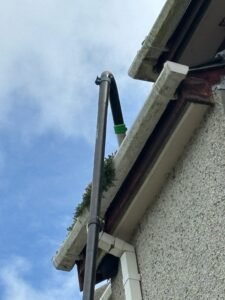
If grass or small plants are growing from your gutters, debris has probably been accumulating for some time.
Seeds can settle among damp leaves and roof moss. As organic material breaks down, it creates conditions where growth can establish. The visible greenery is therefore a warning that the channel may contain more material than you can see from below.
Other signs include:
- Leaves projecting above the gutter edge.
- Moss gathered around corners and outlets.
- Twigs caught across the channel.
- Debris hanging over the roofline.
- Small clumps of material falling during windy weather.
Why visible debris matters
A handful of leaves may look harmless, but material can collect at narrow points and restrict water flow. Wet debris can also be compacted beneath the visible surface.
Homes with nearby trees in Lostwithiel, Looe, Launceston and Bodmin may benefit from closer monitoring, especially after leaf fall. The conditions around the individual building matter more than the town itself: a sheltered property beneath trees may accumulate debris faster than an exposed property nearby.
Roof moss can contribute to gutter blockages even when no trees overhang the house. Material loosening from roof surfaces may settle in the channel or collect around the outlet.
Do plants mean the gutter needs replacing?
Not necessarily. Plant growth indicates that clearance and inspection are overdue, but the gutter may still be serviceable.
Once debris is removed, the condition of brackets, joints and outlets can be assessed. Avoid pulling at growth from an awkward position or pushing debris into the downpipe, where it could create a less accessible blockage.
Professional gutter cleaning should address the accumulated material rather than simply removing the greenery visible from the ground.
3. Stains or damp marks appear beneath the roofline
Blocked gutters can redirect water onto surfaces that should not receive concentrated roof runoff.
You may see dark streaks beneath the gutter, persistent wet patches near a downpipe or localised green growth on a wall. Paintwork and render beneath a repeatedly leaking section may also begin to deteriorate.
These marks deserve investigation, particularly when they become more noticeable after rain.
How can gutter problems affect walls?
When water repeatedly escapes from the same location, it can keep nearby materials wet. The consequences depend on the building’s construction and condition.
The Society for the Protection of Ancient Buildings explains that poor rainwater disposal can contribute to damp patches, timber decay and deterioration of external surfaces. It also identifies both blockages and defective fittings as potential causes. Read SPAB’s guidance on rainwater fittings.
This is a reason to investigate the source promptly, rather than treating staining as a purely cosmetic issue.
Where should you look?
From ground level, check:
- Walls directly below gutter joints.
- Areas around downpipe connections.
- Fascia boards beneath overflowing sections.
- External surfaces above doors and windows.
- Corners where several roof sections discharge rainwater.
For homeowners seeking gutter cleaning in Truro, St Austell or Wadebridge, photographs of these areas can help explain the problem when requesting a quotation.
Does every damp patch mean blocked gutters?
No. Damp and staining can have several causes, including roof defects, damaged pointing, plumbing leaks and condensation.
Gutter clearance will not necessarily resolve an existing damp problem. If a wall remains wet or internal symptoms continue after the drainage issue is addressed, further investigation may be needed.
Cleaning away the visible stain without checking the roof drainage system could leave the underlying cause unresolved.
4. Your gutters are sagging, uneven or pulling away
Gutters should remain securely supported and direct water towards their outlets. A section that bows, twists or pulls away from the fascia needs attention.
Accumulated wet debris and retained water add weight. However, sagging can also result from failed brackets, deterioration of the supporting timber or an installation problem.
What does sagging look like?
You may notice a dip between brackets, a gap behind the gutter or a section sitting lower than the adjoining length.
An uneven run can retain water in a low point, encouraging further accumulation of debris. That can make an existing drainage problem worse.
Properties in Barnstaple, Plymouth and Launceston, including older terraces and buildings with several extensions, may have multiple roof drainage runs. Each section needs consideration; a clear front gutter does not establish that the rear system is working properly.
Is cleaning enough?
Sometimes clearance removes the extra load, but it does not repair a broken bracket or correct the gutter fall.
If guttering is visibly detached, cracked or unstable, arrange an assessment promptly. Keep clear of loose sections and explain the condition before work is booked.
Ask whether your quotation covers cleaning alone or also includes repairs. These are different tasks, and it helps to understand the scope before the appointment.
A useful outcome is a clear gutter supported by sound fittings, with any remaining defects identified for further attention.
5. Water pools below the gutter or the downpipe behaves unusually
Some blockages are easiest to spot at ground level.
A puddle repeatedly forming beneath the same roof corner, splashing beside a downpipe or water escaping from a pipe joint can indicate that rainwater is not following its intended route.
Where discharge is visible, you might also notice that little water emerges from the downpipe even though the connected roof is receiving rain and the gutter is overflowing.
Where might the blockage be?
Debris can collect at the gutter outlet or become lodged inside the downpipe, particularly around bends and connections.
A surface inspection of the gutter alone may miss this. Effective gutter clearance needs to consider the route water takes through the system, including accessible downpipe blockages.
However, pooling can also come from a blocked ground-level gully, an underground drainage issue or the slope of surrounding paving. A puddle by itself does not prove that the gutter needs cleaning.
What should you report?
When requesting gutter cleaning in Looe, Falmouth, Newquay or Barnstaple, describe where the water appears and whether it happens during every rainfall or only in heavy conditions.
Photographs taken from a safe location can help distinguish overflow from a leaking connection.
Explain whether the problem affects one downpipe or several. This information helps the contractor understand what needs checking and whether the job may extend beyond routine clearance.
Why regular gutter cleaning matters in Cornwall and Devon
The best maintenance schedule reflects your property’s surroundings, roof condition and history of blockages.
Leaf fall, loose roof moss and windblown material can all increase the need for clearance. Buildings with awkward roof valleys, several extensions or concealed drainage sections may need particular attention because problems are harder to see.
Holiday accommodation, rented homes and commercial premises can also benefit from planned inspections. If nobody regularly observes the property during rain, a drainage problem may go unnoticed for longer.
Whether your building is in Padstow, St Ives, Lostwithiel or Wadebridge, early checks make it easier to identify a developing blockage before persistent overflow occurs.
How often should you have your gutters cleaned?
An annual gutter clean is a useful starting point for many properties. Buildings surrounded by trees or affected by recurring moss deposits may require more frequent attention.
Consider an additional inspection after autumn leaf fall or after weather that leaves noticeable debris around the roofline. Adjust the schedule based on what is actually found during clearance.
Do not wait for your next planned appointment if gutters begin overflowing, plants become visible or fittings start moving.
Gutter guards can reduce some debris entry, but they do not remove the need for inspection. Fine material can still accumulate, and outlets may remain vulnerable to blockage.
What should professional gutter cleaning include?
Before booking, clarify which roof sections are covered, how debris will be removed and whether downpipe clearance is included.
It is also sensible to discuss access restrictions, conservatories, extensions and any known defects.
Gutter clearance and exterior gutter washing serve different purposes. Removing material from inside the channel supports drainage; washing the outside improves its appearance. A clean-looking exterior does not establish that the channel is unobstructed.
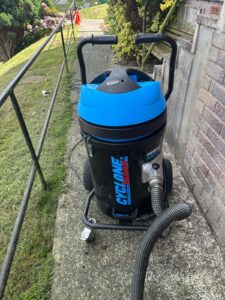
Jet Power Pressure Washing advertises vacuum gutter clearance, downpipe clearance and optional soffit and fascia cleaning for homes and businesses across Cornwall and Devon. See our professional gutter cleaning service for details.
Frequently asked questions
Can gutters be blocked even if there are no nearby trees?
Yes. Roof moss, windblown leaves, twigs and other debris can accumulate even without overhanging branches. Check drainage behaviour rather than relying only on tree coverage.
Will gutter cleaning stop overflowing water?
It should help where debris is the cause. Overflow caused by damaged fittings, incorrect fall or drainage capacity may require additional work.
Should I clean the gutters myself?
Access and working conditions determine what is practical. Do not climb onto a roof or work from an unstable ladder. Professional clearance is a sensible option for high gutters, awkward access and heavy blockages.
How much does gutter cleaning cost?
The price depends on gutter length, building height, access and the extent of the blockage. Downpipe work and repairs may affect the quotation. Request a property-specific price and confirm what it includes.
Should holiday lets and commercial buildings have planned maintenance?
A planned schedule can help owners and managers monitor drainage between visits or tenancies. The right interval depends on the building and how quickly debris accumulates.
Book gutter cleaning in Cornwall and Devon
If you have noticed overflow, plant growth, staining, sagging or unusual pooling, arrange a check before the problem continues through further rainfall.
Jet Power Pressure Washing provides gutter cleaning across Cornwall and Devon, including Barnstaple, Bodmin, Falmouth, Launceston, Looe, Lostwithiel, Newquay, Padstow, Plymouth, St Austell, St Ives, Truro and Wadebridge.
For help with blocked gutters at your home, holiday property or commercial premises, request your free gutter cleaning quote.
Call: 01503 635 536
Email: team@jetpowerpressurewashing.co.uk