Commercial gutters often serve larger roof areas than residential systems. A single blocked outlet can affect entrances, loading areas, customer walkways, external walls or sensitive parts of a building.
For property managers, schools, hotels, holiday parks, retailers and industrial premises, gutter clearance should be treated as planned maintenance rather than an emergency response.
This guide explains how to organise professional commercial gutter cleaning in Cornwall and Devon, what a quotation should include and how to set a sensible maintenance schedule.
Why commercial gutter maintenance matters
Gutters collect roof water and direct it into downpipes and drains. Leaves, moss, silt and windblown debris reduce the available capacity.
When rainfall reaches a restricted section, water can overflow onto areas below. Depending on the building, this may affect:
- Customer and staff entrances.
- Pedestrian routes.
- Cladding, render and masonry.
- Fascia boards and roof edges.
- Stock or equipment near external walls.
- Landscaping and car parks.
- Neighbouring property.
- Areas already vulnerable to water ingress.
Routine clearance cannot prevent every roof or drainage defect, but it removes one common cause of poor rainwater flow and creates an opportunity to identify visible concerns.
Which businesses need commercial gutter cleaning?
Almost every building with gutters needs inspection, but risk varies.
Jet Power Pressure Washing supports:
- Letting agents and property managers.
- Holiday parks, hotels and guest accommodation.
- Schools and colleges.
- Retail units and car dealerships.
- Offices and managed residential blocks.
- Warehouses and light-industrial premises.
- Construction companies and housing developers.
- Hospitality and leisure sites.
A small office in Wadebridge will have different access requirements from a multi-building holiday park near Newquay or a retail site in Plymouth. The programme should follow the site.
How often should commercial gutters be cleaned?
Many organisations begin with annual or twice-yearly clearance. Higher-risk buildings may need more frequent inspection.
Factors affecting frequency include:
- Trees near roof areas.
- The amount of roof moss.
- Roof size and number of outlets.
- Valleys, box gutters and complicated drainage.
- Coastal exposure and windblown debris.
- Previous incidents.
- Consequences if water overflows.
- Periods when the site is closed or lightly staffed.
- Requirements within leases, maintenance plans or insurer guidance.
Autumn clearance is valuable after leaf fall. A spring inspection can remove winter deposits and prepare the system for later rainfall.
Use reports from previous visits to refine the schedule. If the system is consistently full after six months, an annual visit is unlikely to be enough.
What should happen before work starts?
A contractor should understand the building, access and site activity.
Useful pre-work information includes:
- Site plans or roofline drawings where available.
- Approximate building height.
- Known problem areas.
- Opening hours and quiet periods.
- Pedestrian and vehicle routes.
- Locked gates and restricted zones.
- Fragile roofs, canopies and conservatories.
- Asbestos or other building information relevant to the work.
- Required induction and permit arrangements.
- Waste-handling expectations.
- Need for before-and-after photographs.
A site visit may be necessary for larger or more complex properties. Photos are helpful but may not show every hazard or gutter section.
Can commercial gutters be cleaned from the ground?
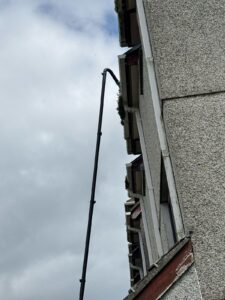
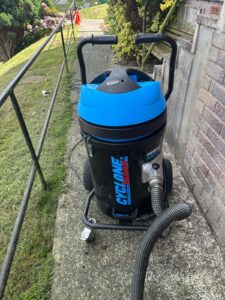
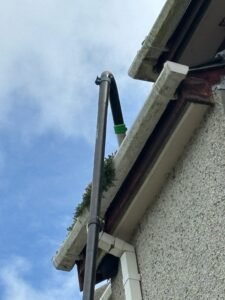
High-reach gutter-vacuum systems can clear many commercial rooflines from ground level. Lightweight poles draw leaves, moss and silt into a collection drum.
Ground-based cleaning can reduce reliance on ladders and may limit disruption. Camera equipment can assist with inspecting some high-level sections.
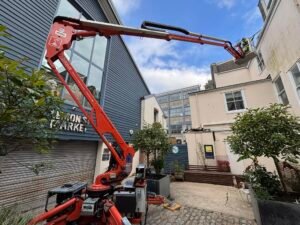
It is not suitable for every building. Deep box gutters, inaccessible courtyards, fixed covers, fragile structures and very high or complex roofs may require mobile access equipment or another specialist method.
Jet Power Pressure Washing uses industrial-grade vacuum systems that can reach up to 15 metres, subject to site conditions. The correct method is confirmed after assessing access and the gutter design.
What should a commercial quotation include?
A useful quotation defines the outcome and boundaries.
Look for:
- The buildings, elevations and gutter sections included.
- Whether outlets and downpipes are covered.
- The proposed access and cleaning method.
- Any excluded or inaccessible areas.
- Management of pedestrians and vehicles.
- Debris collection and disposal.
- Photographic reporting if required.
- Working hours and estimated disruption.
- Insurance and relevant competence.
- Arrangements if defects or deeper drainage blockages are found.
Confirm whether external gutter washing, fascia cleaning and roof cleaning are separate services. Internal clearance supports drainage; exterior washing addresses appearance.
What is included in a gutter report?
Reporting requirements vary, but commercial clients may request:
- Before-and-after photographs.
- Identification of inaccessible sections.
- Notes on visible standing water.
- Observations of loose brackets or leaking joints.
- Locations of suspected downpipe restrictions.
- Recommended maintenance interval.
- Referral of repairs or drainage issues beyond the agreed scope.
A cleaning report is not a structural survey. Its value is documenting the completed clearance and flagging visible concerns for appropriate follow-up.
What if damaged guttering is discovered?
Cleaning and repair are different tasks. Loose brackets, cracked joints, corrosion, poor fall and damaged downpipes may need a competent repair contractor.
The quotation should explain whether minor work can be priced separately or whether defects will simply be reported.
Avoid assuming that clearance will cure every overflow. If problems continue after debris removal, the gutter capacity, roof drainage design, pipe condition or underground system may need investigation.
Commercial gutter cleaning for schools
Schools should plan work around pupils, staff and deliveries. Holidays or quieter periods may reduce disruption, but seasonal timing and weather still matter.
The contractor may need site induction, safeguarding arrangements and carefully controlled working zones. Entrances, playgrounds and vehicle routes should be considered before equipment is positioned.
For schools in Truro, St Austell, Bodmin, Barnstaple and Plymouth, a planned annual or twice-yearly programme can be aligned with wider exterior maintenance.
Hotels, holiday parks and accommodation
Overflowing gutters can affect guest entrances, paths, balconies and the appearance of a property. It may also be difficult to schedule reactive work during peak occupancy.
Hotel and holiday-park managers in Looe, Padstow, Newquay, Falmouth and St Ives can plan gutter clearance for quieter periods while retaining additional checks after severe weather.
Multi-building sites benefit from a clear asset list. Number or name each block so reports and future quotations refer to the same locations.
Retail, office and industrial premises
Retail and office cleaning may need to happen before opening, after closing or in controlled sections. Vehicle movement, deliveries and customer access can affect the working plan.
Warehouses and industrial units frequently have long gutter runs and large roof areas. The volume of water and debris can be significant, and access may require specialist planning.
Businesses in Launceston, Lostwithiel, Wadebridge and Plymouth should give contractors accurate information about height, operating hours and site hazards before work is priced.
Can gutter cleaning be combined with other services?
Yes, where the methods and access arrangements are compatible.
Jet Power Pressure Washing can provide gutter clearance alongside services such as:
- Commercial exterior cleaning.
- Soffit and fascia cleaning.
- Pressure washing.
- Cladding cleaning.
- Roof cleaning.
- High-access exterior cleaning.
Combining work may reduce repeated site setup, but each service should remain clearly described and priced.
How should property managers compare contractors?
Compare scope as well as price.
A low quotation may exclude downpipes, difficult elevations, reporting or waste removal. Ask each contractor to price the same specification.
Check:
- Public-liability insurance.
- Relevant training and equipment.
- Experience with comparable properties.
- Risk-assessment arrangements.
- Clarity of exclusions.
- Communication and reporting.
- Ability to work around site operations.
- References or verified reviews where appropriate.
Do not select a method solely because it sounds advanced. The contractor must show that it suits the building.
Building a planned maintenance schedule
Start by listing every building and drainage section. Record the last clean, known defects, surrounding vegetation and previous overflow incidents.
Classify areas according to consequence. A gutter above a rarely used planted area may have a different priority from one above a public entrance or sensitive internal space.
Schedule work, record findings and review the frequency annually. Add post-storm observations where the site is exposed.
This turns gutter cleaning from a reactive purchase into manageable property maintenance.
Commercial coverage across Cornwall and Devon
Jet Power Pressure Washing provides professional commercial gutter cleaning throughout Cornwall and Devon, including Barnstaple, Bodmin, Falmouth, Launceston, Looe, Lostwithiel, Newquay, Padstow, Plymouth, St Austell, St Ives, Truro and Wadebridge.
We work with individual premises and multi-site clients. Every quotation is based on the property, access and required scope.
Frequently asked questions
Can you clean gutters without disrupting customers?
Often, work can be phased or scheduled outside busy periods. Site access and safety requirements determine the final plan.
Do you clean high commercial gutters?
High-reach equipment can access many gutters up to 15 metres. Complex or inaccessible sections may require other access arrangements.
Can you provide photos?
Photographic reporting can be discussed and included in the agreed scope.
Do you clear commercial downpipes?
Accessible outlets and downpipe blockages can be included. Deep or underground problems may require specialist drainage work.
Do you offer regular contracts?
Planned schedules can be discussed for individual or multi-site properties based on their maintenance requirements.
Request a commercial gutter-cleaning quotation
For a site-specific quotation, contact Jet Power Pressure Washing, call 01503 635 536, or email team@jetpowerpressurewashing.co.uk.
Include the site address, building type, approximate height, known problem areas and preferred working times.