Outdoor spaces are often the first thing people notice about a home or business. Over time, dirt, grime, algae, and moss can accumulate on patios, driveways, decks, and walls, making these areas look dull and neglected. Proper cleaning techniques, especially pressure washing, can breathe new life into these spaces, restoring their original beauty and enhancing curb appeal. This guide will walk you through effective methods to revive your outdoor areas using pressure washing and other complementary cleaning strategies.
Understanding Pressure Washing and Its Benefits
Pressure washing is a powerful cleaning method that uses high-pressure water spray to remove dirt, mold, mildew, and other contaminants from surfaces. It is especially effective on hard surfaces like concrete, brick, wood, and stone. The benefits of pressure washing include:
- Restoring Appearance: Removes years of built-up grime, making surfaces look fresh and new.
- Preventing Damage: Eliminates mold and algae that can degrade materials over time.
- Increasing Property Value: A clean exterior boosts curb appeal and can increase property value.
- Saving Time and Effort: Cleans large areas quickly compared to manual scrubbing.
When done correctly, pressure washing is safe and efficient. However, it is important to use the right pressure settings and techniques to avoid damaging surfaces.
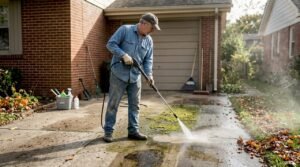
Pressure washing a concrete driveway to remove dirt and stains
Essential Pressure Washing Techniques for Outdoor Spaces
To get the best results from pressure washing, follow these practical steps:
1. Prepare the Area
Before starting, clear the area of furniture, plants, and other items. Cover delicate plants with plastic sheeting to protect them from high-pressure water and cleaning chemicals.
2. Choose the Right Equipment and Settings
- Use a pressure washer with adjustable PSI (pounds per square inch) to match the surface type.
- For delicate surfaces like wood or painted areas, use lower pressure (around 500-1200 PSI).
- For tough surfaces like concrete or brick, higher pressure (up to 3000 PSI) can be used.
- Select the appropriate nozzle tip; wider angles (25-40 degrees) are gentler, while narrow angles (0-15 degrees) provide more force.
3. Use Suitable Cleaning Solutions
Some stains require detergents or specialized cleaners. Use biodegradable, eco-friendly solutions when possible. Apply the detergent with the pressure washer’s soap dispenser or a pump sprayer, let it sit for 5-10 minutes, then rinse thoroughly.
4. Maintain Proper Technique
- Hold the wand at a consistent distance (usually 12-18 inches) from the surface.
- Move the wand in smooth, overlapping strokes to avoid streaks.
- Avoid holding the spray in one spot to prevent damage.
- Work from top to bottom on vertical surfaces.
5. Post-Cleaning Care
After washing, inspect the area for any missed spots or damage. Reseal surfaces like decks or patios if necessary to protect them from future wear.
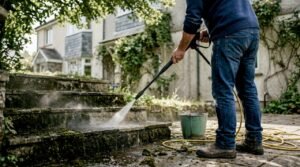
Close-up of pressure washer nozzle cleaning a wooden deck surface
How much can you charge for pressure washing in the UK?
If you are considering offering pressure washing as a service in the UK, understanding pricing is crucial. Charges vary depending on factors such as the size of the area, surface type, and complexity of the job. Here are some general guidelines:
- Residential Driveways and Patios: £50 – £150 per job, depending on size.
- Deck Cleaning: £40 – £100, depending on wood type and condition.
- Commercial Properties: Prices can range from £200 to £1000+ based on scale and frequency.
Many professionals charge by the square meter, with rates typically between £0.50 and £4.50 per square meter. Additional services like sealing or stain removal may increase costs.
To stay competitive, ensure you provide quality work, use professional equipment, and offer excellent customer service. Building a reputation through positive reviews and referrals can help you grow your business.
Complementary Cleaning Methods to Enhance Outdoor Spaces
While pressure washing is highly effective, combining it with other cleaning techniques can further improve your outdoor space:
Manual Scrubbing
For delicate surfaces or stubborn stains, manual scrubbing with a stiff brush and mild detergent can help. This is especially useful for wooden furniture or intricate stonework.
Chemical Treatments
Algae, moss, and mold can be treated with specialized chemical solutions before pressure washing. These treatments kill growths at the root, preventing quick regrowth.
Sealing and Protecting Surfaces
After cleaning, applying a sealant to surfaces like concrete, brick, or wood can protect them from moisture, stains, and UV damage. Sealants extend the life of your outdoor areas and reduce the frequency of cleaning needed.
Regular Maintenance
Establish a routine cleaning schedule to keep outdoor spaces looking their best. Regular sweeping, spot cleaning, and occasional pressure washing prevent buildup and prolong the life of surfaces.
Stone patio cleaned and sealed after pressure washing
When to Hire Professional Pressure Washing Services
While DIY pressure washing can be effective for small jobs, there are times when hiring professionals is the best choice:
- Large Areas: Professionals have industrial-grade equipment that cleans faster and more thoroughly.
- Complex Surfaces: Delicate or textured surfaces require expert handling to avoid damage.
- Stubborn Stains: Professionals can use specialized chemicals and techniques.
- Safety Concerns: High-pressure water can be dangerous if not handled properly.
- Time Constraints: Professionals save you time and effort.
If you want to ensure the best results with minimal hassle, consider using pressure washing services from experienced providers.
Keeping Your Outdoor Spaces Beautiful Year-Round
Maintaining clean and inviting outdoor spaces is an ongoing process. Here are some tips to keep your areas looking great throughout the year:
- Seasonal Cleaning: Schedule pressure washing in spring and autumn to remove winter grime and prepare for summer use.
- Protect Plants: Use barriers or cover plants during cleaning to prevent damage.
- Inspect Surfaces: Regularly check for cracks, loose tiles, or wood rot and repair promptly.
- Use Mats and Rugs: Place outdoor mats at entrances to reduce dirt tracked inside.
- Store Equipment Properly: Clean and store your pressure washer and accessories to prolong their lifespan.
By following these guidelines, you can enjoy fresh, clean outdoor spaces that enhance your property’s appeal and provide a pleasant environment for relaxation and entertainment.
Reviving your outdoor spaces with proper pressure washing techniques is a smart investment in your property’s appearance and longevity. Whether you choose to tackle the job yourself or hire professionals, understanding the right methods and maintenance practices will ensure your outdoor areas remain beautiful and welcoming for years to come.