(And How Professionals Stop Regrowth)
Patios are one of the most used outdoor spaces for homes across Cornwall and Devon. Whether you’re relaxing in a garden in Truro, hosting guests in Falmouth, or enjoying a coastal view in St Ives or Newquay, a clean patio can dramatically improve the appearance and safety of your property.
Unfortunately, many homeowners quickly notice the same frustrating problem: after cleaning their patio, the green algae or stubborn black spots return surprisingly quickly.
If you’ve ever wondered why your patio looks great after pressure washing but starts turning green again just months later, you’re not alone. Across Cornwall and Devon towns such as St Austell, Penzance, Bodmin, Plymouth, Exeter and Torquay, patios face unique environmental conditions that accelerate organic growth.
In this guide, we’ll explain:
- Why patios in Cornwall and Devon develop algae and black spot so quickly
- What black spot actually is
- Why DIY pressure washing often fails to remove it permanently
- The professional methods used to stop regrowth
- How homeowners can keep patios cleaner for longer
Why Patios in Cornwall & Devon Turn Green So Quickly
The climate in Cornwall and Devon creates the perfect environment for algae and lichen growth.
Unlike many inland areas of the UK, the South West experiences:
- Higher humidity levels
- Frequent rainfall
- Mild winters
- Coastal salt air
- Shaded gardens surrounded by trees or hedges
These conditions mean that organic growth can thrive almost year-round.
In towns like Falmouth, Newquay, Penzance and St Ives, coastal moisture and salt particles in the air contribute to persistent algae growth. Even inland areas such as Bodmin, Launceston, Totnes and Tavistock see rapid buildup due to damp valleys and heavy tree coverage.
Patios that receive limited sunlight are particularly vulnerable. North-facing patios or those surrounded by fences, hedges or buildings often stay damp for long periods, creating the perfect breeding ground for algae.
What Is the Green Film on My Patio?
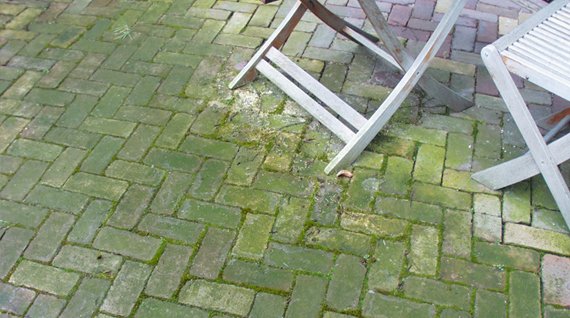
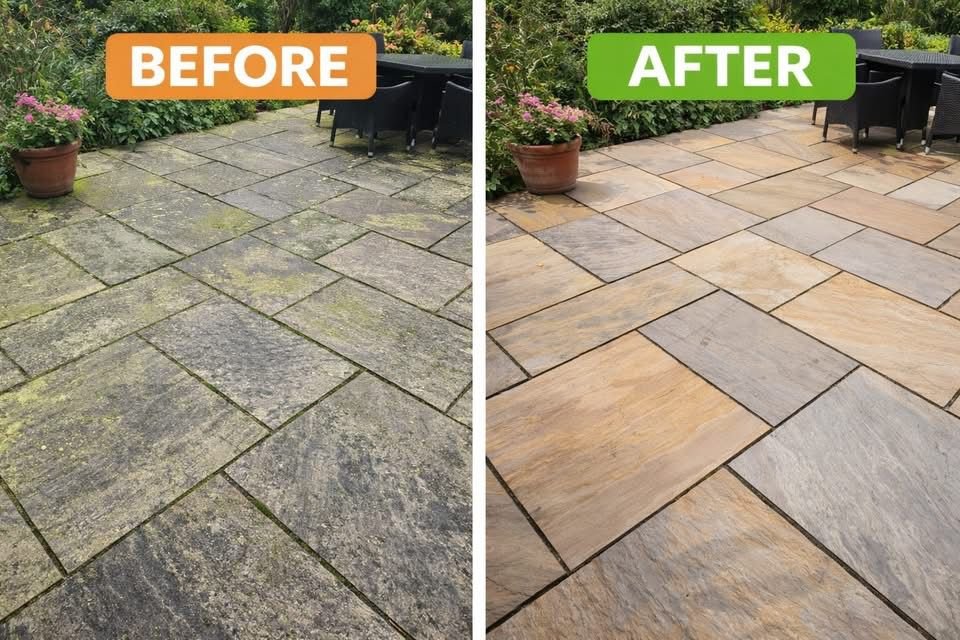
The green layer that appears on many patios is usually algae.
Algae thrives in damp environments and spreads through microscopic spores that travel through the air. When these spores land on a surface that retains moisture, they begin to grow rapidly.
Algae is most common on:
- Sandstone patios
- Concrete paving slabs
- Block paving
- Limestone surfaces
- Garden paths and steps
Beyond looking unattractive, algae also creates a serious safety hazard. When wet, algae-covered patios become extremely slippery.
This is one of the main reasons many homeowners search for professional pressure washing services to restore their outdoor spaces.
👉 https://jetpowerpressurewashing.co.uk/pressure-washing/
What Are Black Spots on Patios?
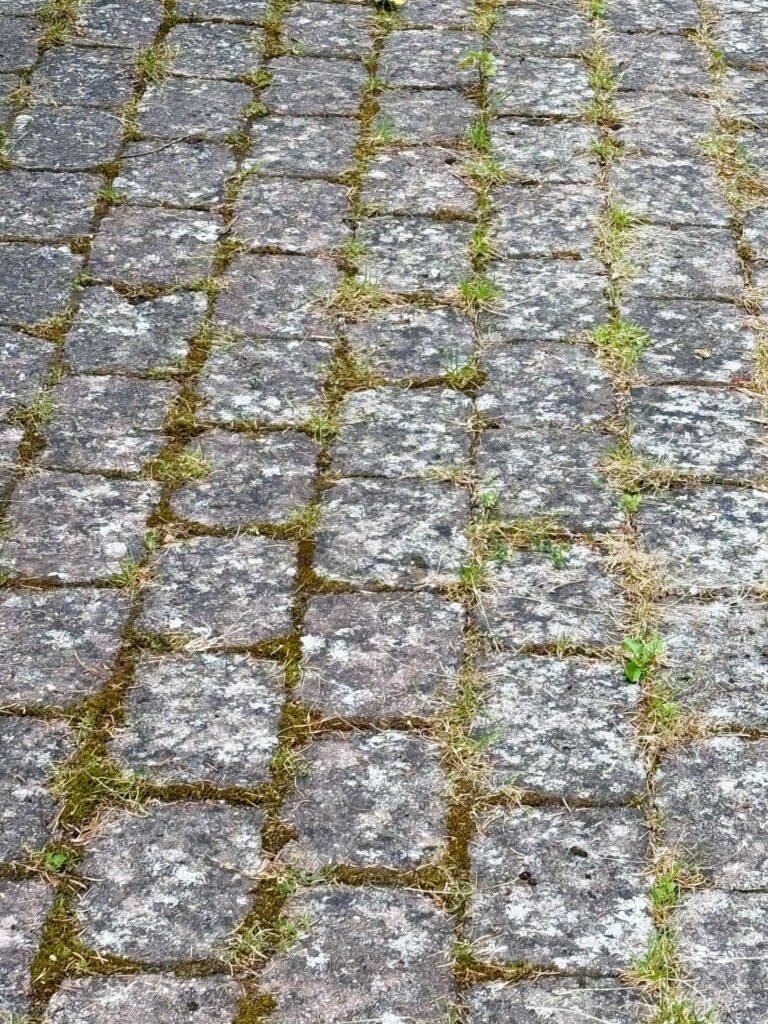
The dark, stubborn marks that often appear on patios are known as black spot lichen.
Lichen is a complex organism formed by a partnership between algae and fungi. Unlike simple surface algae, lichen embeds itself deeply into porous materials such as stone and concrete.
This is why black spots are much harder to remove than general dirt or algae growth.
Black spot commonly appears on:
- Sandstone paving
- Concrete slabs
- Block paving
- Limestone patios
Once established, it anchors itself into tiny pores within the surface. This makes it extremely resistant to basic cleaning methods.
Why Black Spot Is So Difficult to Remove
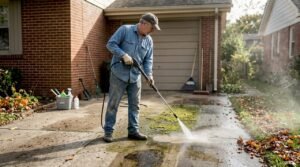
Many homeowners attempt to remove black spot using a domestic pressure washer. While this can improve the appearance temporarily, it rarely eliminates the problem completely.
There are several reasons for this.
Lichen Roots Into the Surface
Unlike surface dirt, black spot grows inside the microscopic pores of paving materials. Pressure washing may remove the visible layer but often fails to kill the underlying organism.
Spores Remain Active
Even if the visible stain disappears, spores remain embedded in the stone. Given the right conditions, they quickly grow again.
DIY Equipment Lacks Power and Control
Domestic pressure washers often lack the correct pressure levels and professional surface cleaners required to remove deeply embedded contaminants safely.
Why Patios Often Turn Green Again After Cleaning
Many homeowners notice that their patio looks fantastic immediately after cleaning, only for algae to return within a few months.
This happens because basic cleaning removes the symptoms rather than the cause.
Common reasons for rapid regrowth include:
- Remaining spores in the surface
- Damp garden environments
- Nearby vegetation
- Lack of preventative treatment
Without addressing the root cause, algae and lichen simply begin growing again.
The Professional Approach to Patio Cleaning
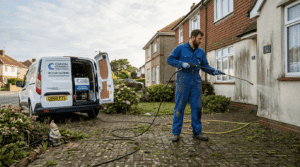
Professional exterior cleaning companies take a much more comprehensive approach to patio restoration.
The goal is not just to clean the surface but to eliminate organic growth and slow future regrowth.
Professional cleaning typically involves three key stages.
Stage 1: Pre-Treatment
Before pressure washing begins, patios are often treated with specialist cleaning solutions designed to weaken algae and lichen.
This helps break down organic growth and allows it to be removed more effectively during the cleaning process.
Pre-treatment is particularly important for patios heavily affected by black spot.
Stage 2: Professional Pressure Washing
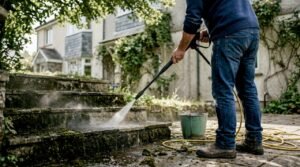
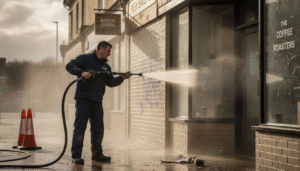
Unlike basic DIY equipment, professional cleaning systems use commercial-grade machinery and rotary surface cleaners.
These tools allow technicians to:
- Clean evenly without streaking
- Remove embedded contaminants
- Adjust pressure to suit the material
- Protect delicate surfaces
Professional equipment also reduces the risk of surface damage that can occur when domestic jet washers are used incorrectly.
Stage 3: Biocide Treatment to Prevent Regrowth
The most important step in stopping algae and black spot from returning is the application of a biocide treatment.
Biocides kill remaining spores and prevent organic growth from quickly re-establishing itself.
This treatment continues working long after the cleaning process is complete.
In Cornwall and Devon’s damp climate, this step is essential for long-lasting results.
How Long Do Professional Results Last?
The longevity of patio cleaning results depends on several factors:
- Amount of shade
- Surrounding vegetation
- Coastal exposure
- Surface type
- Weather conditions
In most cases, professionally cleaned patios remain significantly cleaner for 12–24 months.
Regular maintenance cleaning helps keep surfaces looking their best year-round.
Why Professional Cleaning Is Safer for Your Patio
Using the wrong pressure or technique can damage paving surfaces.
Common DIY mistakes include:
- Using excessive pressure
- Cleaning too close to the surface
- Stripping jointing sand from block paving
- Etching stone surfaces
Professional cleaning ensures that the correct pressure and techniques are used for each surface type.
This protects your patio while delivering better results.
Other Exterior Factors That Contribute to Patio Staining
Sometimes patios develop algae and black spot due to problems elsewhere around the property.
For example:
Blocked Gutters
Overflowing gutters can cause constant water runoff onto patios and paths.
👉 https://jetpowerpressurewashing.co.uk/gutter-cleaning/
Roof Moss
Moss falling from roofs often lands on patios and decomposes, contributing to staining.
👉 https://jetpowerpressurewashing.co.uk/roof-cleaning/
Render Staining
Algae growth on nearby walls can spread to surrounding surfaces.
👉 https://jetpowerpressurewashing.co.uk/render-cleaning/
Addressing the full exterior of a property often provides the best long-term results.
Why Patio Cleaning Is Especially Important in Coastal Areas
Homes in coastal locations such as St Ives, Newquay, Padstow, Falmouth and Penzance face additional environmental pressures.
Salt particles carried in sea air accelerate staining and encourage algae growth.
Combined with frequent rainfall, this creates ideal conditions for patios to deteriorate quickly.
Regular professional cleaning helps prevent surfaces from becoming permanently discoloured.
The Benefits of Professional Patio Cleaning
Regular patio cleaning provides several advantages:
- Restores original colour and appearance
- Reduces slip hazards
- Extends patio lifespan
- Prevents permanent staining
- Improves kerb appeal
- Increases property value
For many homeowners, cleaning is far more affordable than replacing paving that has become heavily stained.
Areas We Cover Across Cornwall & Devon
Jet Power Pressure Washing provides professional patio and exterior cleaning across towns and villages including:
Cornwall:
Truro
Newquay
Falmouth
St Austell
Penzance
Bodmin
Wadebridge
St Ives
Helston
Devon:
Plymouth
Exeter
Torquay
Paignton
Newton Abbot
Totnes
Ivybridge
Tavistock
If your patio is becoming slippery, stained or heavily affected by black spot, professional cleaning can restore it safely and effectively.
👉 Request your free quote today:
https://jetpowerpressurewashing.co.uk/contact-us/
Frequently Asked Questions
How do I remove black spot from a patio?
Black spot lichen usually requires specialist cleaning treatments and professional pressure washing to remove effectively. Domestic jet washers often struggle to eliminate it completely.
Why does my patio go green every year?
Algae grows quickly in damp environments. Cornwall and Devon’s humid climate, frequent rainfall and shaded gardens allow spores to spread easily.
Is pressure washing enough to stop algae coming back?
Pressure washing alone removes visible growth but may not kill underlying spores. Biocide treatments are often used to slow regrowth.
How often should patios be professionally cleaned?
Most patios benefit from professional cleaning every 12–24 months, depending on shade, moisture levels and nearby vegetation.
Is patio cleaning safe for plants and gardens?
When carried out professionally, precautions are taken to protect plants and surrounding landscaping.
Can pressure washing damage paving?
Yes, if the wrong pressure or technique is used. Professional equipment allows cleaning to be tailored to each surface type.
Does patio cleaning increase property value?
Clean outdoor spaces improve kerb appeal significantly, which can make a strong impression on potential buyers.